Original Content
5 Zero Trust Myths — Debunked
Enjoyed this breakdown? The original post on LinkedIn has the full discussion and comments from security professionals.
View on LinkedInZero Trust is one of the most misunderstood concepts in modern security. Everyone talks about it — few actually implement it correctly. Here's what you need to know before buying into the hype.
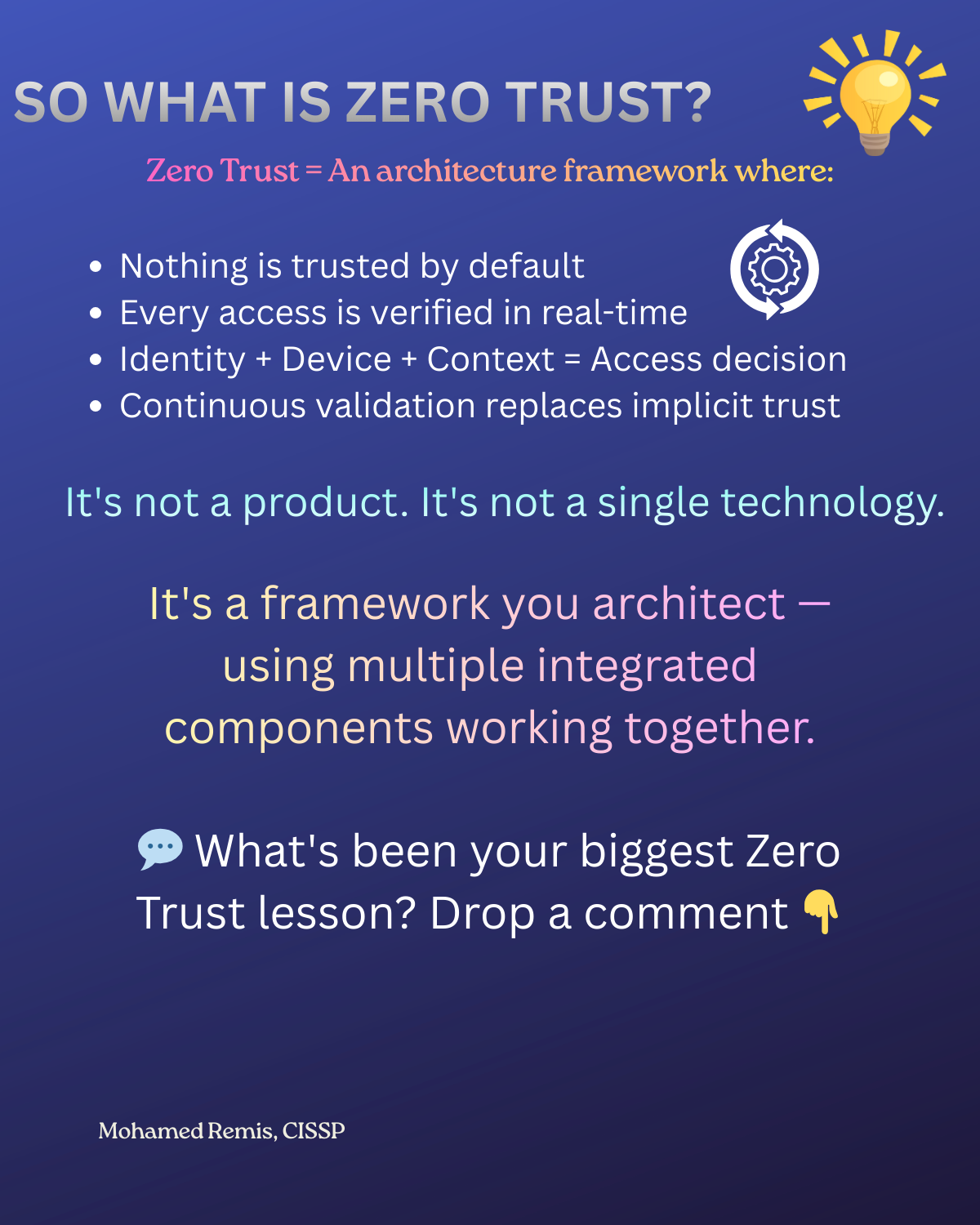
Zero Trust is not a product you buy or a box you tick. It's an architectural philosophy built on one core principle — never trust, always verify.
Traditional security assumed everything inside the network perimeter was safe. Zero Trust throws that assumption out entirely. Every user, every device, every connection is treated as potentially compromised until proven otherwise — regardless of where they are.
The result is a security model that is continuous, context-aware, and far more resilient to modern threats like lateral movement and identity-based attacks.
Enjoyed this breakdown? The original post on LinkedIn has the full discussion and comments from security professionals.
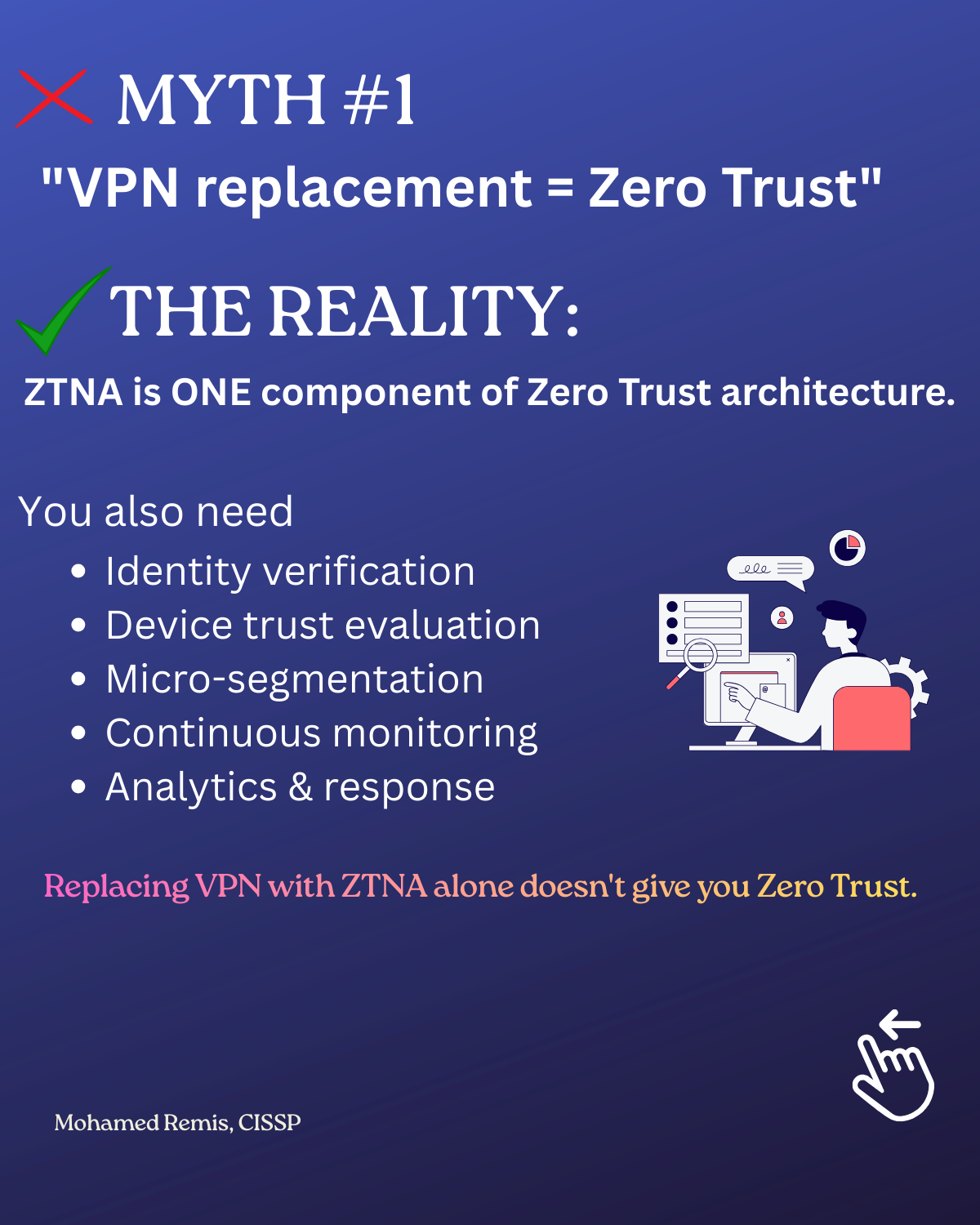
View on LinkedInZTNA replaces VPN access but Zero Trust is a full architecture — identity, device trust, micro-segmentation and more.
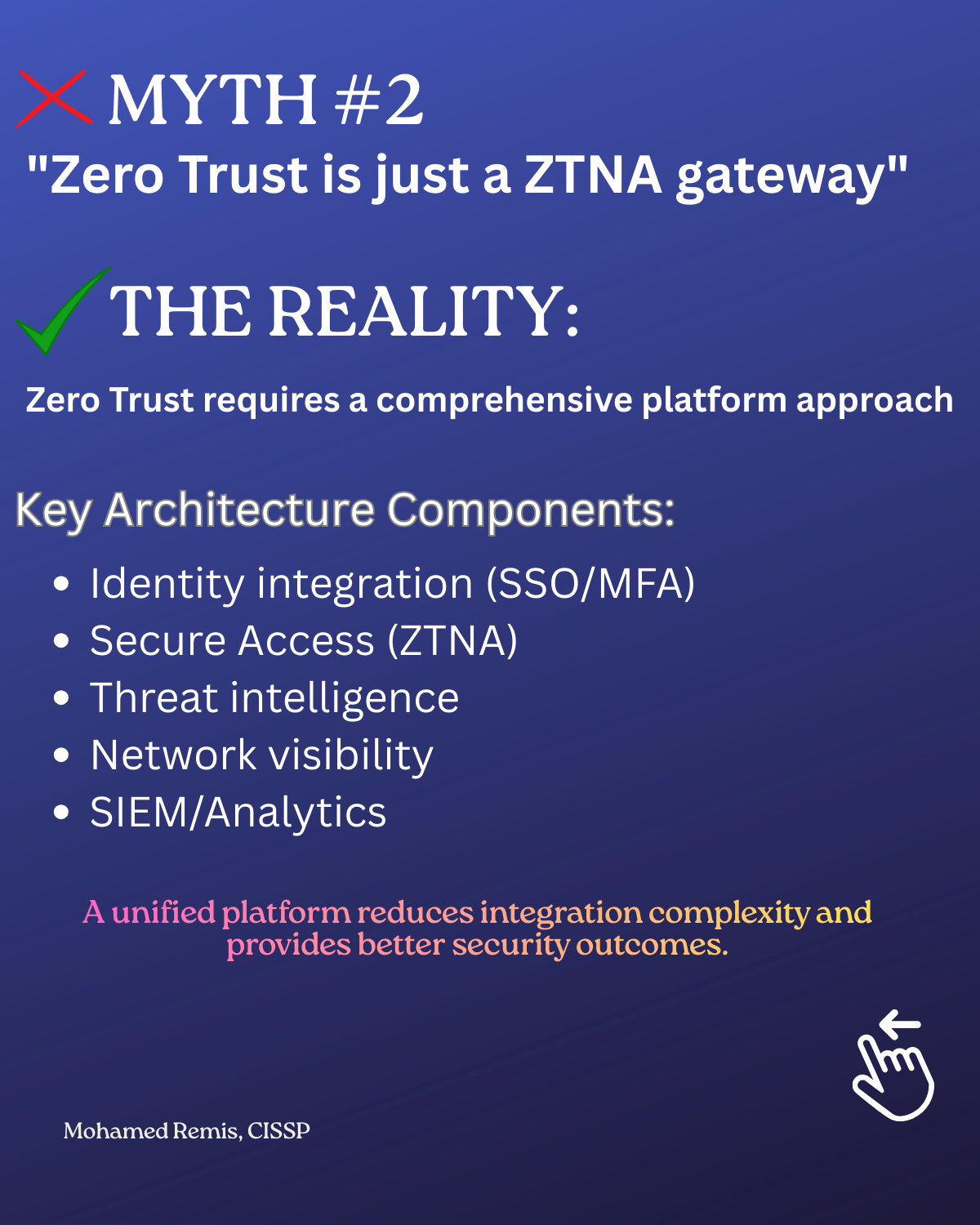
Zero Trust requires a unified platform — SSO, MFA, ZTNA, threat intelligence, SIEM, and network visibility working together.
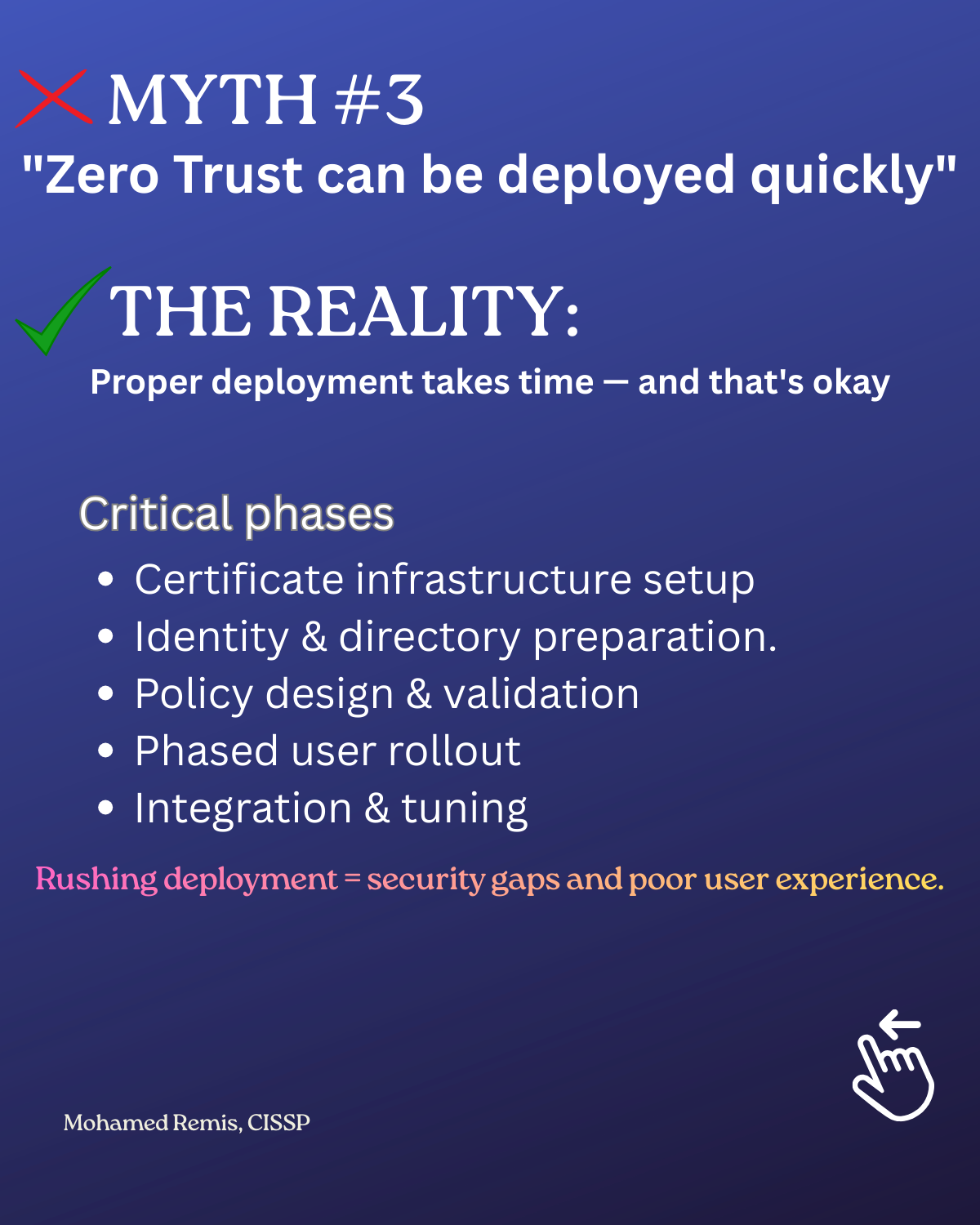
Rushing Zero Trust creates security gaps. Phased deployment with proper policy design is not optional, it's essential.
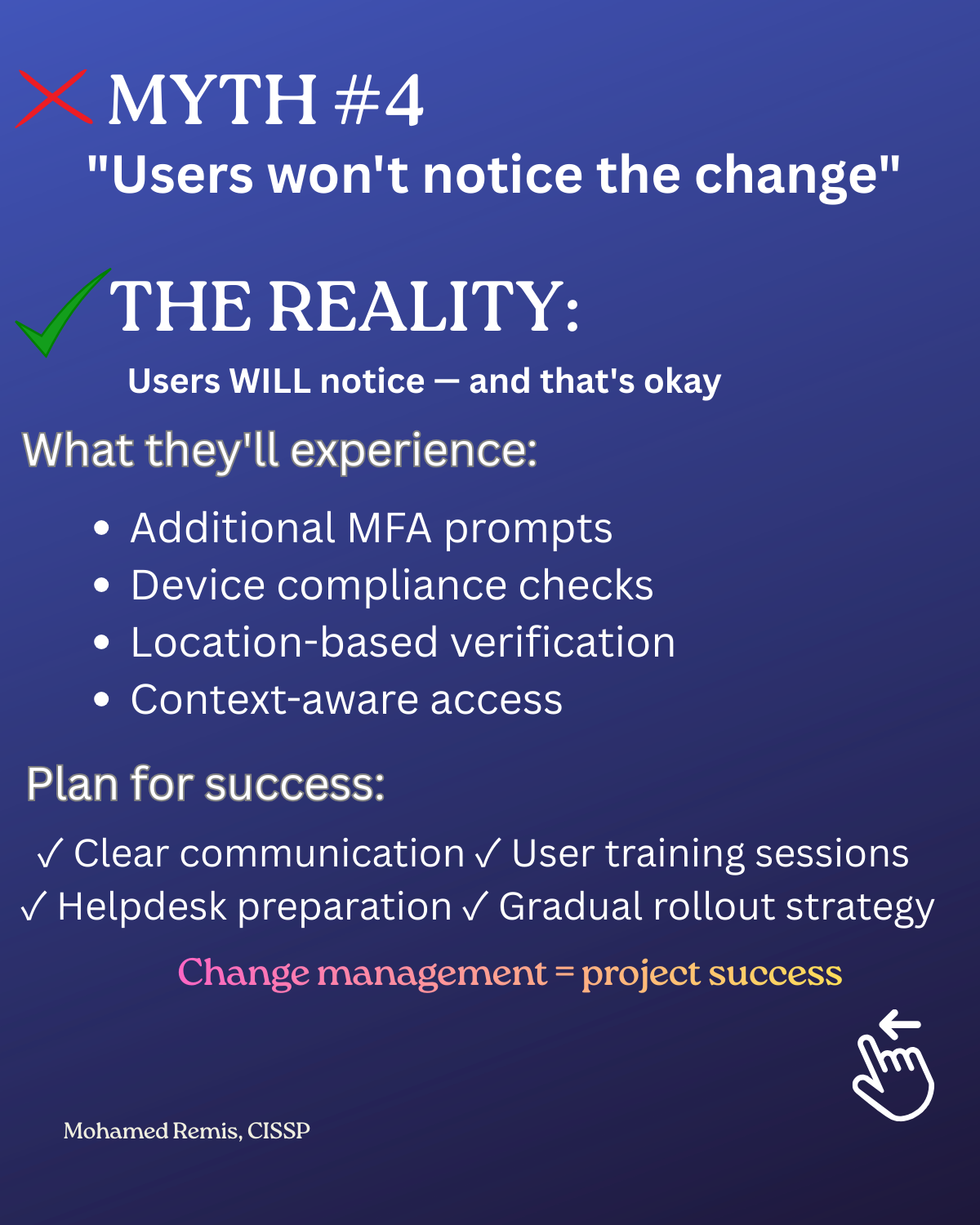
MFA prompts, device checks, context-aware access — users feel the change. Plan for it with training and clear communication.
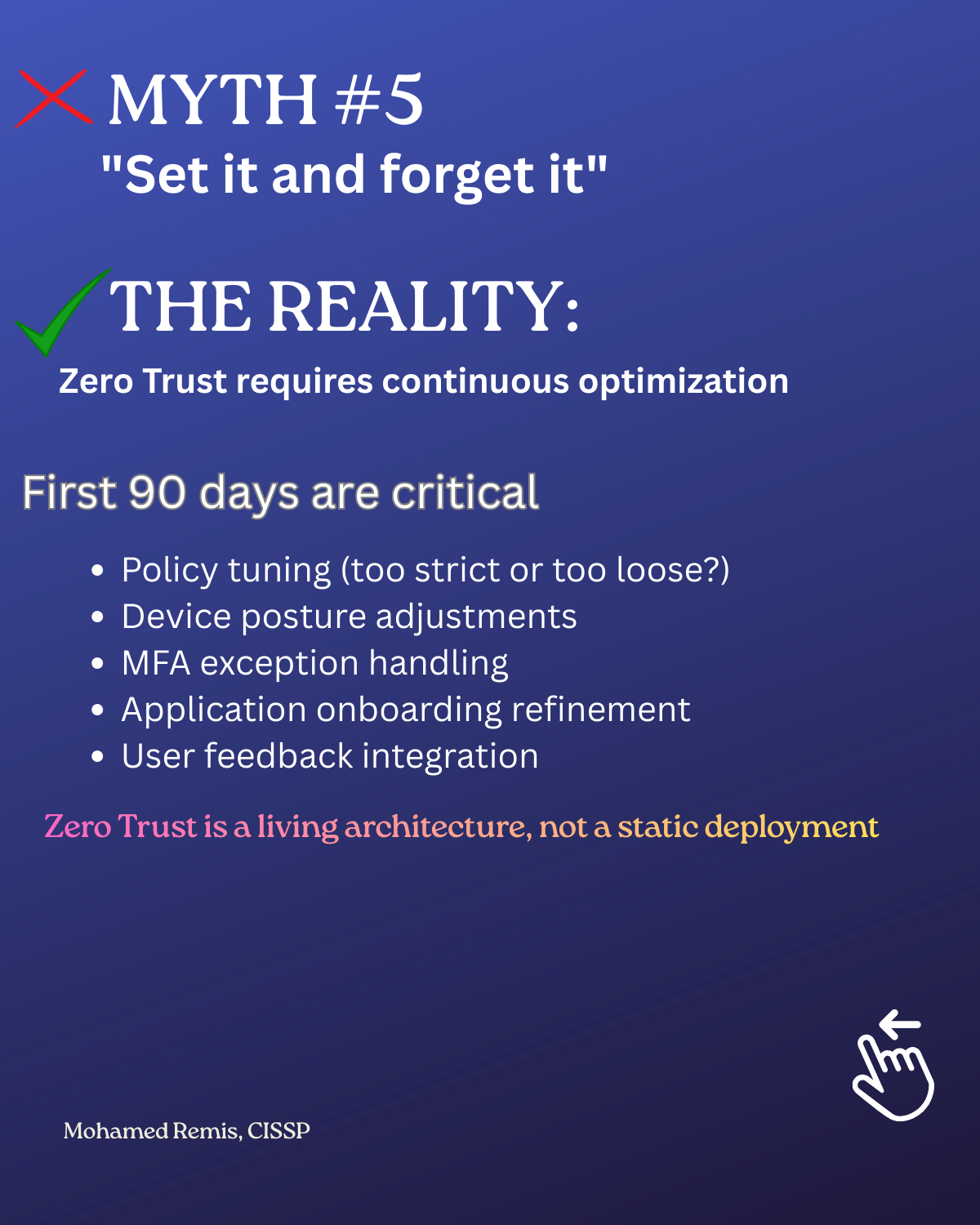
The first 90 days are critical. Policy tuning, posture adjustments, and user feedback integration are ongoing requirements.